Minting on Bullet is how new collections come into the world. New collections sell on a bonding curve: the price starts low and climbs as copies sell, you can sell back at any point instead of waiting for a buyer, and when the curve sells out it turns itself into a permanent Uniswap market. New to the model? Start with what 404s are. Otherwise, here's how to take part, start to finish.
What you need
- —A wallet — anything that speaks WalletConnect or injects into the browser. Hit Connect in the top right and Bullet will prompt you to switch to the right network automatically.
- —ETH on the Robinhood chain — everything is priced in ETH. The panel quotes your exact total before you sign, and gas on Robinhood is negligible.
Reading the mint page
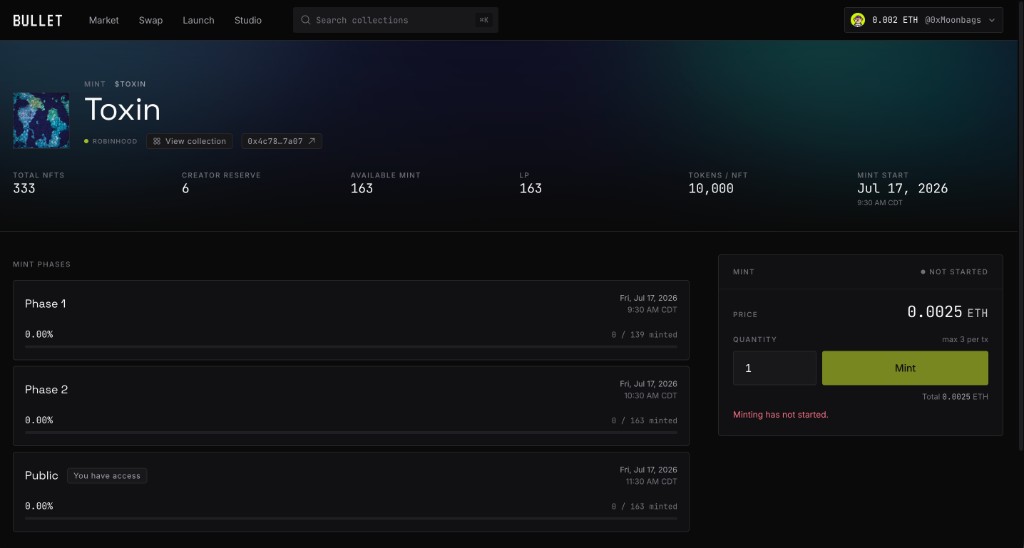
Every live mint has its own page under Launch. The strip of numbers across the top tells you everything about how the collection is structured:
How the price works
There is no fixed mint price. The curve quotes a price that rises as copies sell — the first is the cheapest and the last costs five times the first — so the panel always shows you the exact total for the quantity you picked, fees included.
- —You can sell back at any time. The curve buys as well as sells, at whatever it currently quotes. You never need someone else to show up.
- —A 10% fee sits inside every trade, buys and sells alike. It is already in the number you see; nothing is added at signing.
- —You always pay the quoted price or better. Buys deliberately overpay a little to absorb price movement, and the difference comes straight back in the same transaction.
On most platforms a freshly minted NFT is illiquid — you can't sell until a buyer appears. Here the ETH paid in stays in the contract backing the curve, so it can always buy your NFT back. When the sale completes that same ETH becomes Uniswap liquidity, and the market continues without a gap.
Phases and who can buy when
Some launches open with allowlist phases, listed down the left side of the page. Early phases are allowlist-only; once they have all run, buying is public and stays that way. Each phase shows when it opens and how long it lasts.
- —If your wallet has an allowance in a phase, you'll see it on that phase once your wallet is connected, along with how many you may buy.
- —Phases run back to back on a fixed schedule. When one window ends the next opens automatically, whether or not anyone used it.
- —An allowance is a cap, not a reservation. Buying is first-come, first-served, and a phase can have more spots granted than there are NFTs left. If you have access, buy early in your window.
- —A launch with no phases at all is public from the moment it opens.
Buying
When buying is open to you, the panel on the right activates. Pick a quantity — up to 50 per transaction, and you can submit as many transactions as your allowance permits — and hit Buy. Your wallet asks you to confirm the total shown.
Near the end of a sale you may be able to buy fewer than you asked for. That is normal and not a failure: the order fills what is left and refunds the rest, rather than reverting and wasting your gas. The panel tells you up front when this will happen.
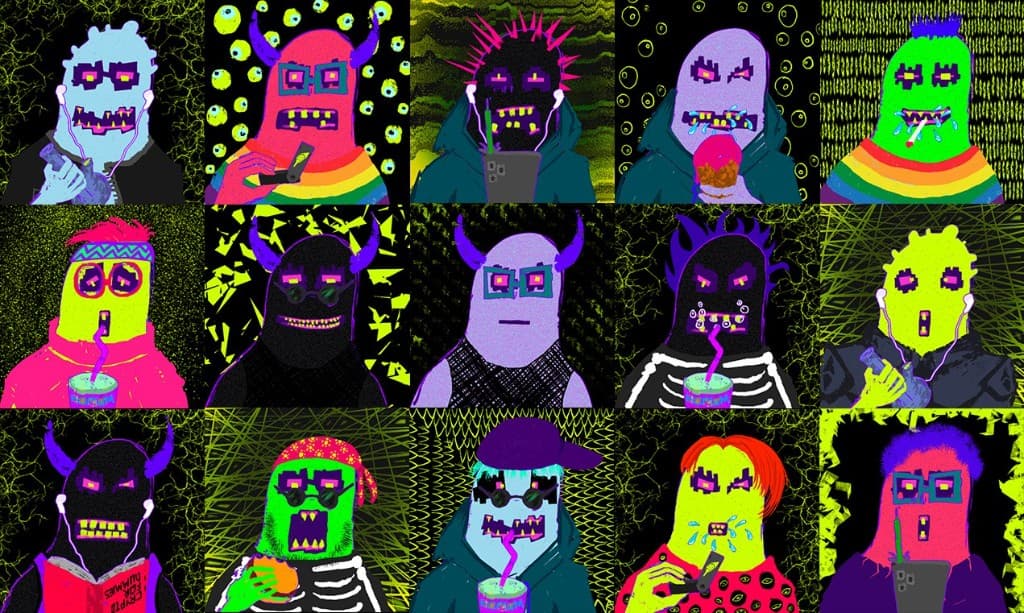
Once the transaction confirms, the NFTs are in your wallet and they'll appear under your items. Which pieces you get is decided by the collection's artwork — here are two from TOXIN, the collection in the screenshots:
Graduation
A curve ends one way: it sells out. There is no timer to run out and no way for it to be cancelled, so it either fills or it keeps trading. The moment the last NFT sells, the collection graduates inside that same transaction — the ETH the curve raised and the supply held back for liquidity go into a permanent Uniswap pool, and the action moves to the collection page:
- —Trading opens against the pool. The ETH from the sale is the market's own liquidity, so there's a live price from the first minute — no waiting for bids.
- —Every NFT has a floor you can actually hit. Because each NFT is backed by tokens that trade in the pool, you can sell instantly at market price, any time.
- —Buy, sell, or sweep on the collection page. Listed pieces trade individually; the token side trades on Swap.
Where to buy and sell
You have two venues, and they're the same market:
- —On Bullet — the collection page for whole NFTs, or Swap for the token side. This is the easiest path: buy a full unit and the NFT lands in your wallet automatically.
- —On Uniswap — every collection's token trades in a Uniswap pool, so you can buy and sell it through any Uniswap interface too.
Bullet's Swap and Uniswap route to the same liquidity pool — the one created at graduation. There's no separate "Bullet price" and "Uniswap price", and liquidity is never split between venues. Trade wherever is convenient; the market is identical. Just remember the token mechanics: accumulate a full unit's worth of tokens (TOKENS / NFT) and you hold the NFT, wherever you bought them.
The sold counter updates in real time, and so does the price. If a curve is moving fast, don't wait for the end of your phase — an allowance doesn't reserve inventory, and every copy sold before yours makes yours more expensive.